Coin Validator Progression in Vintage Gaming Equipment Amid Manipulation Pressures
Written by Logan Klein · Jun 5, 2026

Coin Validator Progression in Vintage Gaming Equipment Amid Manipulation Pressures
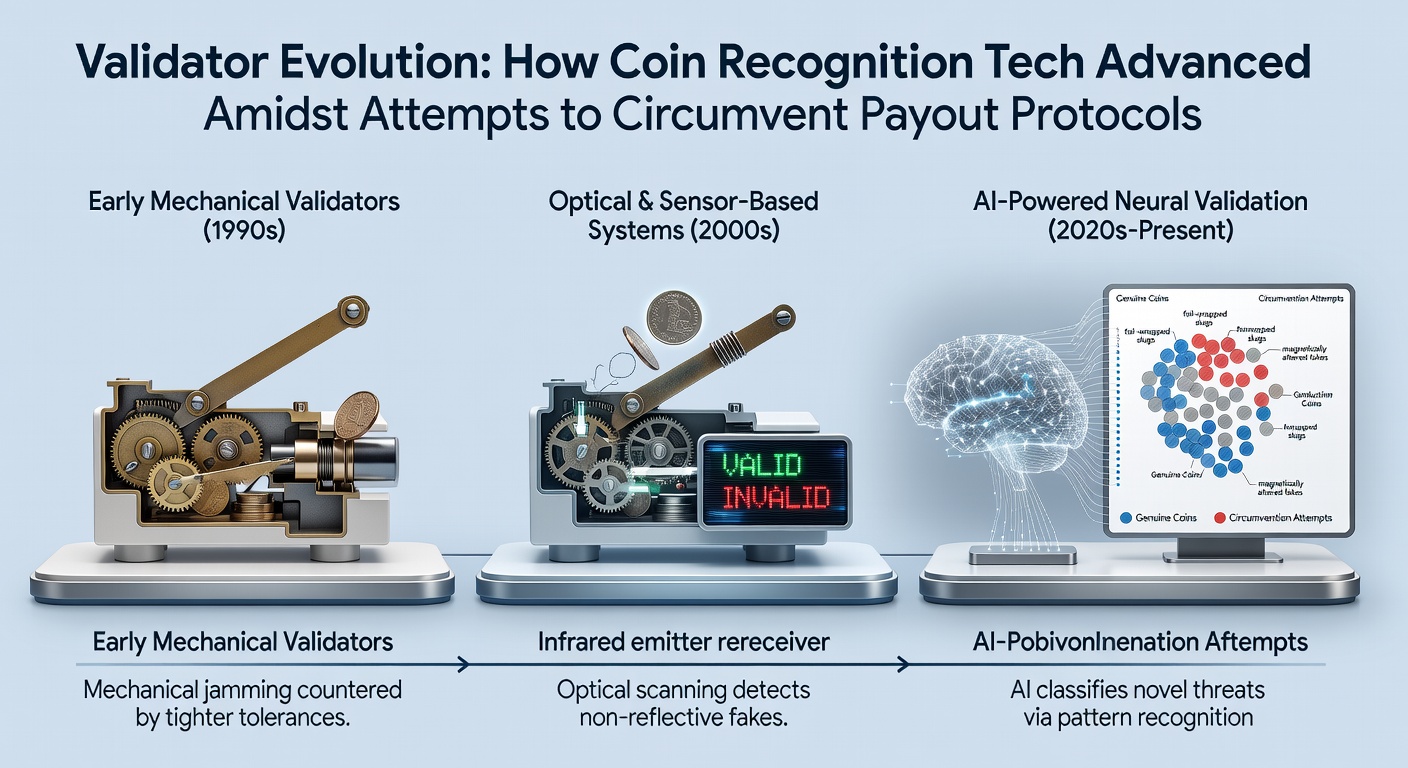
Legacy gaming machines relied on coin validators that began as simple mechanical gates and weight checks, yet these systems quickly faced circumvention through altered tokens and physical modifications that operators documented across multiple decades. Researchers tracked how initial designs measured diameter and mass with basic levers and springs, but determined individuals soon introduced shaved edges and composite materials that passed initial gates while triggering unintended payouts. Data from industry maintenance logs indicate that such exploits prompted manufacturers to integrate electromagnetic coils by the late 1970s, which measured metallic composition through induced currents and rejected non-standard alloys before credits registered.
Transition from Mechanical to Electromagnetic Detection
Equipment suppliers responded by embedding multiple sensors in sequence so that coins passed through magnetic fields, optical beams, and pressure plates within a single chute assembly. Studies from gaming technology laboratories show these layered approaches reduced acceptance rates for counterfeit pieces by measurable margins, while operators noted fewer service calls related to jammed mechanisms. And yet the adaptations created new variables because sophisticated users experimented with conductive coatings and timed insertions that momentarily fooled sequential checks.
Integration of Optical and Digital Processing
By the early 1990s validators incorporated infrared emitters and photodetectors that captured coin edge profiles and surface reflectivity patterns, converting analog signals into digital signatures for comparison against stored templates. Figures from equipment certification reports reveal that these upgrades coincided with firmware updates allowing machines to log rejection events and adjust sensitivity thresholds remotely. Observers note that such capabilities let venues monitor patterns across banks of machines without manual inspection, although determined attempts continued with precision-machined replicas designed to mimic accepted signatures.
Manufacturers then introduced microprocessor-controlled units capable of running real-time comparison algorithms that accounted for wear on genuine coins over time. One documented case involved a regional operator who recorded a cluster of anomalous acceptances traced to tokens modified with embedded metallic inserts, prompting a rapid rollout of updated comparator chips across affected sites. Those who've examined archived service records find that diagnostic ports became standard features, enabling technicians to retrieve acceptance histograms and identify emerging bypass techniques before widespread exploitation occurred.
Responses to Specific Circumvention Methods
Shaved and slimmed tokens presented persistent challenges that validators addressed through combined diameter and thickness measurements supplemented by acoustic resonance testing in later models. Research indicates that resonance profiles differ measurably between solid coins and hollowed variants, allowing software to flag anomalies within milliseconds of entry. Gaming equipment associations in several jurisdictions compiled databases of known manipulation signatures that validator firmware referenced during each transaction cycle.
Yet adaptation never ceased because individuals explored temperature-altered materials and string-assisted retrieval methods that validators countered with directional sensors and rapid-reject solenoids. Data compiled through 2025 shows continued incremental firmware patches even for equipment no longer in primary production, reflecting sustained interest in preserving payout integrity on preserved units. In June 2026 several technical working groups plan to release updated interoperability standards that incorporate lessons from these historical exchanges, focusing on backward-compatible sensor modules for heritage collections.
Legacy Influence on Contemporary Designs
Modern systems retain core principles refined during the validator evolution period, including redundant verification paths and event logging that trace directly to solutions developed for legacy cabinets. Academic examinations of gaming hardware history highlight how early optical arrays laid groundwork for today's multi-spectral imaging used in both land-based and remote platforms. Industry reports from certification bodies in North America and Europe document the transfer of detection algorithms across equipment generations, ensuring that payout protocols remain resistant to physical and electronic circumvention attempts alike.
Technicians working with restored machines often reference archived comparator charts when calibrating units, demonstrating the enduring relevance of data collected during peak periods of manipulation activity. What's notable is how these records continue to inform training programs for maintenance personnel who service both vintage and updated equipment in mixed environments.
Conclusion
The progression of coin recognition technology in legacy machines illustrates a sustained technical dialogue between detection capabilities and circumvention methods that unfolded over successive hardware generations. Records maintained by equipment manufacturers and regulatory laboratories demonstrate measurable improvements in acceptance accuracy alongside reductions in successful bypass incidents. Continued reference to these developments supports ongoing preservation efforts and informs standards discussions scheduled for mid-2026, ensuring historical insights remain accessible for future equipment certification processes.