Global Adoption of Optical Sensor Arrays Ends Coin Manipulation in Gaming Equipment
Written by Bianca Russell · Aug 5, 2026
Global Adoption of Optical Sensor Arrays Ends Coin Manipulation in Gaming Equipment
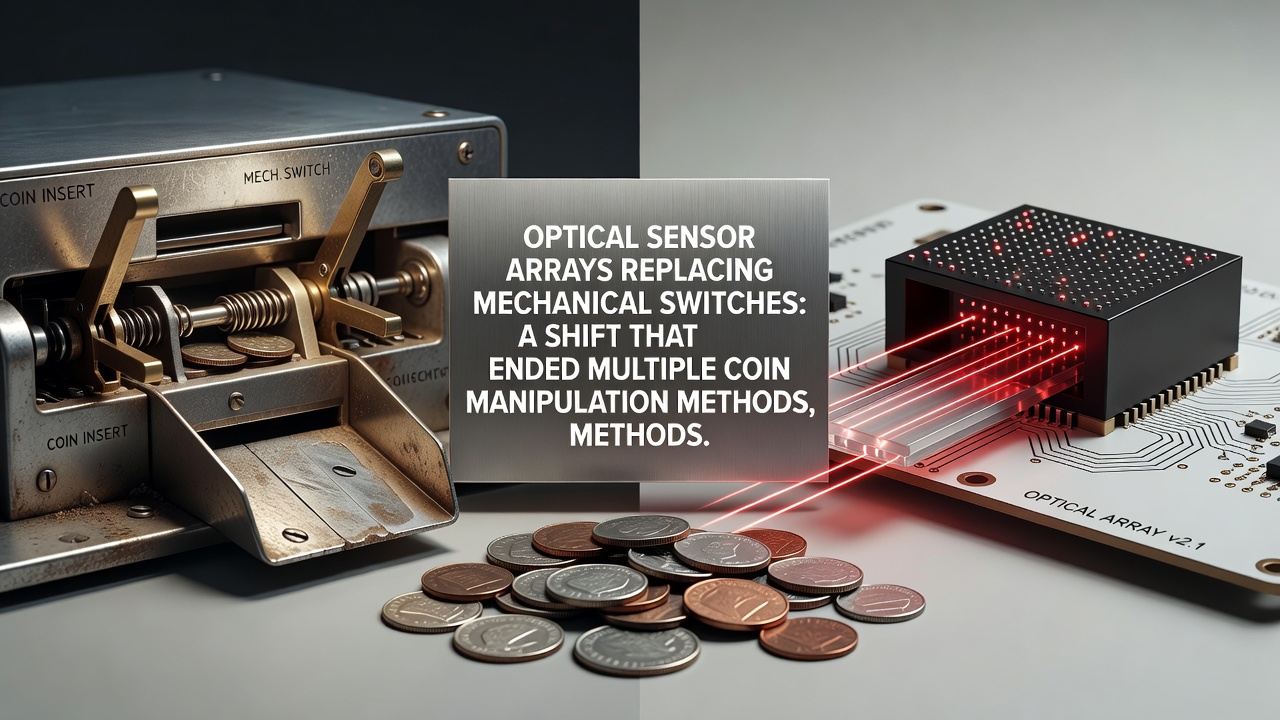
The replacement of mechanical switches with optical sensor arrays in coin-operated gaming devices represents a fundamental engineering change that closed off several long-standing manipulation techniques. This transition began in the late 1990s and accelerated through the 2000s as manufacturers integrated light-based detection systems capable of verifying coin presence, size, and velocity without physical contact. Data from equipment manufacturers shows that optical arrays reduced successful coin fraud incidents by measurable percentages in jurisdictions where the upgrades were mandated. Mechanical switches relied on physical levers or contacts that closed circuits when a coin passed through. Those systems allowed techniques involving strings, wires, or altered coin shapes to trigger repeated credits. Optical arrays instead use infrared emitters and receivers positioned across the coin path. When a coin interrupts the light beam, the system records exact timing and blockage patterns. Any deviation from expected profiles triggers rejection before credits register.Technical Differences Between Switch Types
Traditional mechanical assemblies featured spring-loaded arms and microswitches that activated on coin weight and diameter. Maintenance logs from arcade operators indicate frequent failures from dirt buildup and wear, creating opportunities for repeated attempts. Optical setups eliminated moving parts entirely. Researchers at technical institutes documented that sensor arrays could sample coin passage at rates exceeding 1000 times per second, generating data streams that mechanical contacts could not match.
Installation patterns varied by region. European venues completed large-scale retrofits by 2008 while North American operators followed staggered schedules tied to state gaming regulations. A 2015 report from the Nevada Gaming Control Board noted that facilities adopting optical detection recorded fewer coin-related discrepancies in audit samples compared with locations still using older hardware.
Methods Rendered Ineffective by Sensor Upgrades
Techniques that once exploited switch timing became impractical once light beams replaced physical contacts. String-pulling methods required precise tension to hold a switch open without full coin drop. Optical systems detect the continuous beam interruption pattern and reject the attempt. Shaved or slimmed tokens that slipped past worn mechanical tolerances now fail size verification because sensors measure diameter and thickness through shadow analysis.
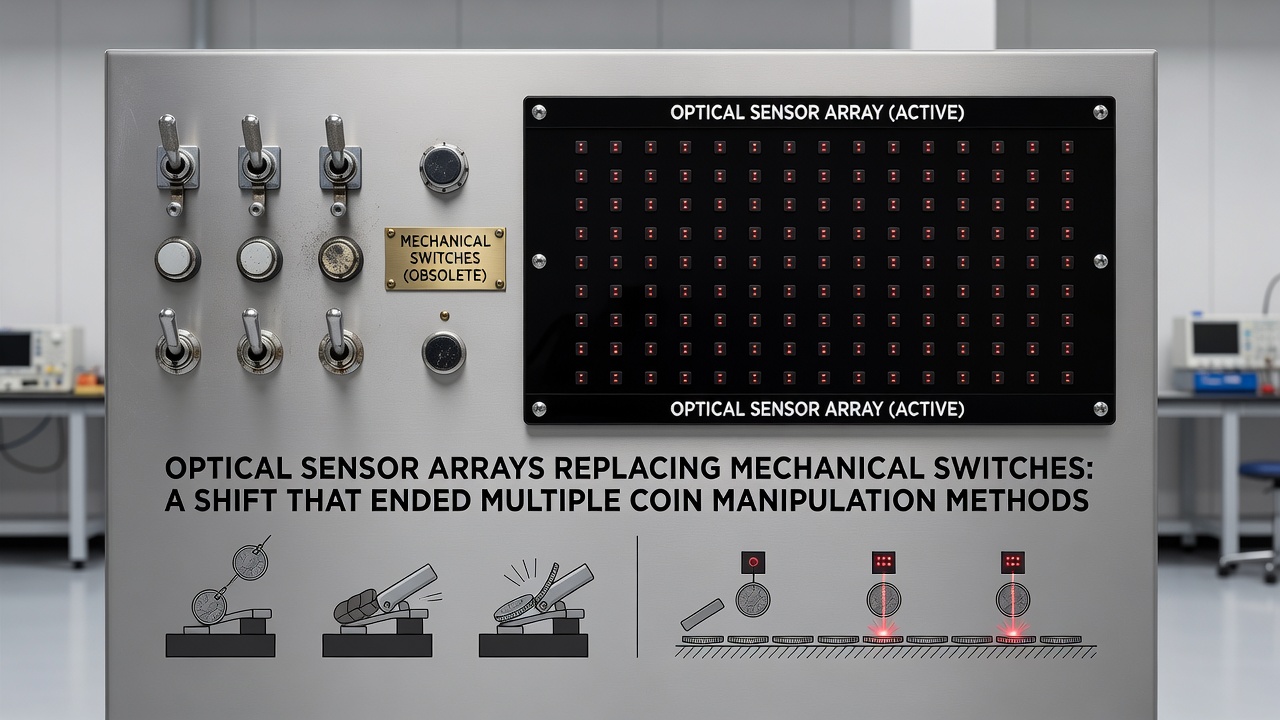
Yo-yo style retrievals that bounced coins against switches to generate multiple signals produce irregular velocity readings under optical monitoring. The arrays log entry and exit timestamps, flagging any reversal or hesitation. Industry studies compiled by the Gaming Standards Association show that venues completing optical conversions reported near-elimination of these specific exploits within twelve months of installation.
Implementation Timeline and Regional Variations
Japan led early adoption with optical coin validators appearing in pachinko equipment during the 1990s. Australian gaming authorities required similar upgrades in licensed venues by 2004. In August 2026 several Canadian provinces completed final phase-outs of mechanical coin systems in remaining land-based facilities, according to provincial lottery and gaming corporation announcements. These staggered rollouts created comparative datasets that confirmed optical arrays delivered consistent fraud reduction across different regulatory environments.
Manufacturers such as IGT and Aristocrat incorporated sensor redundancy into new cabinet designs. Dual-beam configurations cross-check readings, and firmware updates allow rapid adjustment when new token alloys appear in circulation. Academic papers from engineering departments at universities in Germany and Singapore have examined signal processing algorithms that distinguish legitimate coins from counterfeits with increasing precision.
Maintenance and Operational Outcomes
Facilities that completed the switch to optical arrays reported lower downtime from validator jams. Without physical contacts to bend or corrode, service intervals lengthened. Operators in multiple jurisdictions documented reduced spare-parts inventories once mechanical components were phased out. Training materials from equipment suppliers emphasize calibration checks rather than mechanical adjustment procedures.
Security teams at large casino groups now focus monitoring resources on digital transaction logs instead of physical coin paths. The shift freed personnel for other duties while maintaining detection capabilities for remaining threats such as electronic interference attempts.
Conclusion
Optical sensor arrays replaced mechanical switches through steady engineering refinement rather than sudden mandates. The resulting hardware eliminated entire categories of coin manipulation by removing the physical interfaces those methods required. Records from regulatory bodies and operator associations across multiple continents show sustained declines in coin-related discrepancies following conversion projects. As equipment fleets continue aging, the remaining mechanical systems represent shrinking exceptions in an industry now built around light-based verification.