Mathematical Barriers in Reel Randomization: Examining Why Algorithmic Interventions Cannot Alter Certified Gaming Outcomes
Written by Parker Bennett · Jul 22, 2026
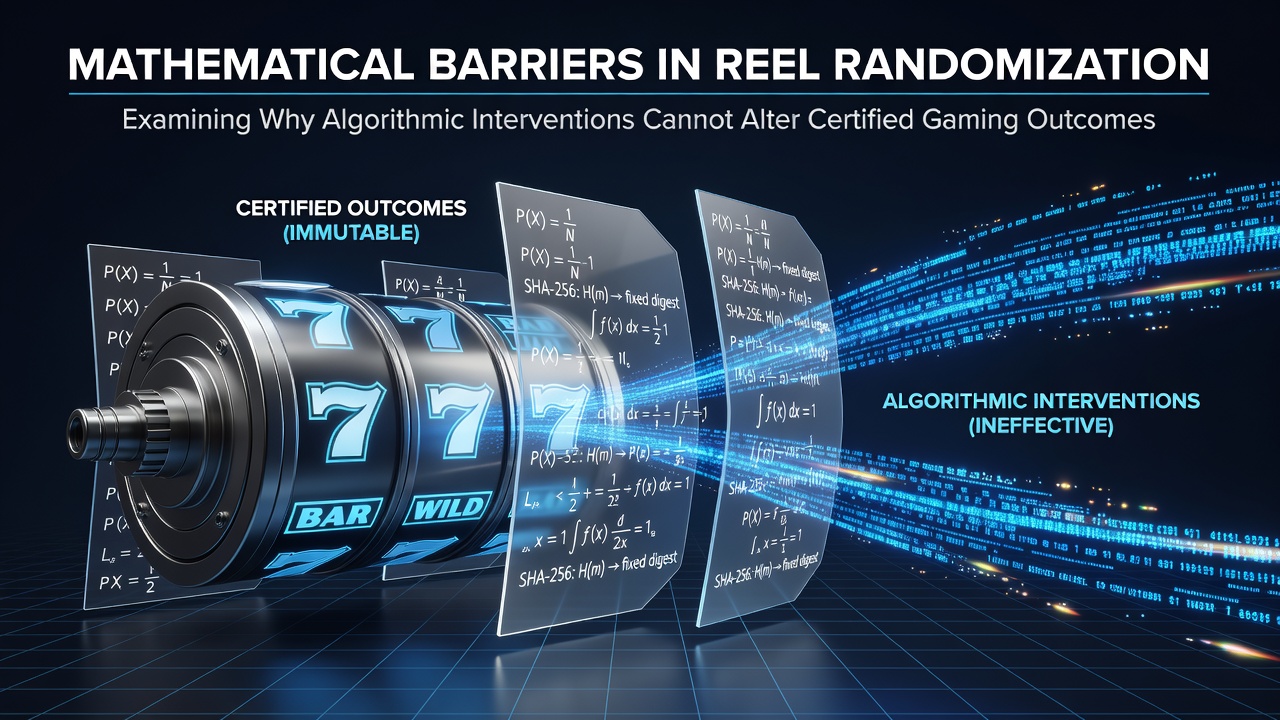
Mathematical Barriers in Reel Randomization: Examining Why Algorithmic Interventions Cannot Alter Certified Gaming Outcomes
Certified gaming systems rely on random number generators that undergo rigorous testing before deployment, and these systems incorporate mathematical structures designed to resist external manipulation while preserving outcome integrity across millions of spins. Observers note that any attempt to introduce algorithmic interventions encounters fundamental limits rooted in probability theory, entropy requirements, and statistical independence that define certified reel behavior.
Core Principles Behind Certified Randomization
Reel randomization in modern gaming machines depends on either true random sources or cryptographically secure pseudorandom generators that meet standards set by independent testing laboratories. These generators produce sequences where each outcome maintains equal probability and remains statistically independent from previous results, a property verified through extensive test suites that examine distribution uniformity, serial correlation, and period length. Data from regulatory frameworks in multiple jurisdictions shows that certification requires generators to pass millions of simulated cycles without detectable patterns, which creates an initial barrier because any added algorithm would need to operate inside the same mathematical constraints without introducing bias detectable by those same tests.
Those who've studied gaming mathematics recognize that altering certified sequences requires either changing the underlying generator or intercepting its output, yet both approaches conflict with the sealed nature of approved implementations. External code attempting to predict or steer results would violate the independence axiom that certification bodies enforce, since each reel stop derives from a fresh extraction that carries no memory of prior states. Research indicates that even minor adjustments to weighting tables or seed values shift the entire distribution enough to fail re-certification audits.
Entropy and Predictability Constraints
High-entropy sources feed certified generators, and this requirement limits how much an external algorithm can influence outcomes without reducing overall randomness below acceptable thresholds. When entropy drops, patterns emerge that statistical suites flag immediately, a situation documented in laboratory reports from testing organizations across North America and Europe. Algorithmic interventions that attempt to model reel behavior therefore face a circular problem: accurate modeling demands access to the internal state, yet that state refreshes with each cycle using fresh entropy that remains inaccessible to outside processes.
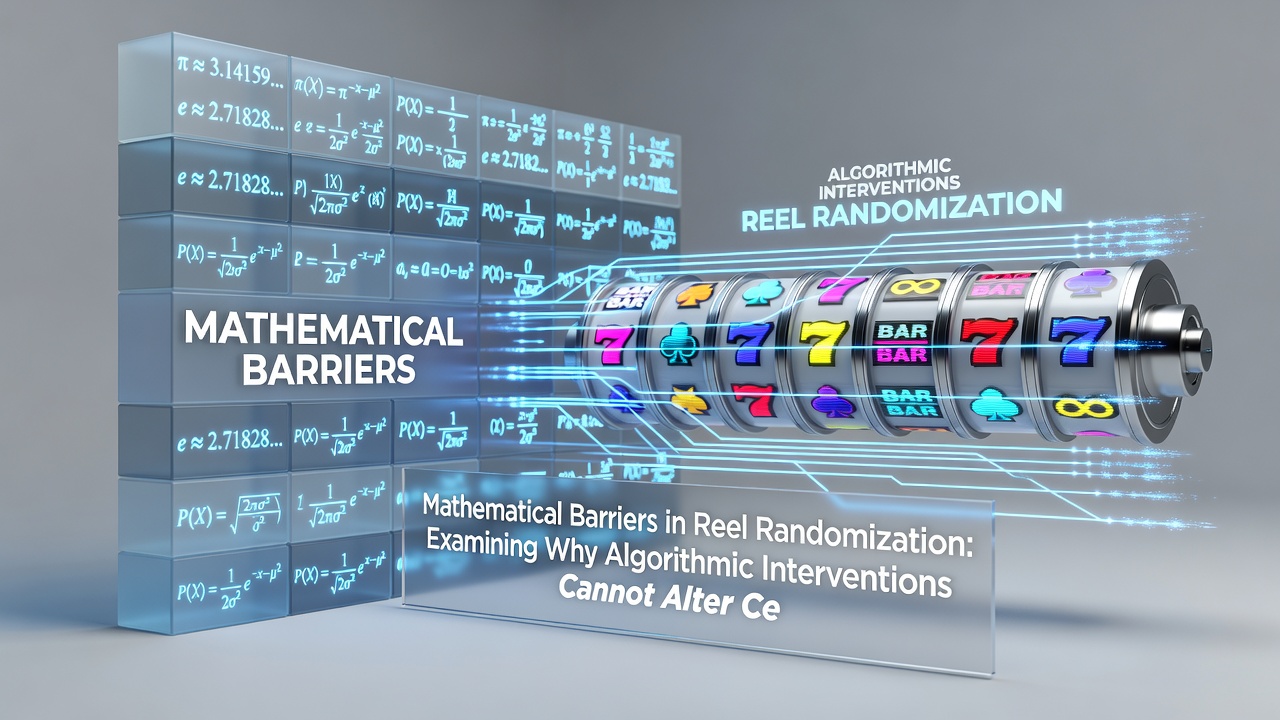
Studies from academic research groups examining pseudorandom constructions have demonstrated that even advanced machine-learning predictors achieve negligible success rates against properly seeded cryptographic generators used in gaming. The period lengths of these generators exceed practical observation windows by many orders of magnitude, so any intervention calibrated on observed data quickly loses relevance once the generator cycles past the training window. Figures from industry reports released in early 2026 confirm that re-certification cycles continue to tighten entropy and correlation requirements, further narrowing the window for successful manipulation attempts.
Certification Seals and Runtime Protections
Once a generator receives approval, regulatory protocols require that the binary image and associated configuration remain unchanged, with cryptographic signatures and hardware locks preventing runtime modifications. July 2026 updates from several North American and Australian oversight bodies introduced additional runtime attestation checks that verify generator integrity at each boot cycle. These measures ensure that any algorithmic overlay attempting to redirect reel outcomes would trigger integrity failures before play begins. People familiar with gaming system architecture note that memory protection units and secure boot chains now isolate the randomization module from application-level code, eliminating common injection vectors that older platforms once exposed.
Attempts to bypass these protections through side-channel methods encounter additional mathematical hurdles because certified output streams maintain constant statistical properties regardless of external timing or environmental variations. Data collected during forensic audits shows that even sophisticated probing techniques fail to extract usable state information without violating the physical security requirements that accompany certification.
Statistical Independence as the Ultimate Barrier
The requirement that each reel position remains independent of all others creates the most durable obstacle to algorithmic steering. Interventions that condition future outcomes on past results necessarily introduce dependence, a flaw that surfaces during routine compliance sampling performed by regulators. According to reports issued by the Nevada Gaming Control Board, any detected serial correlation immediately triggers investigation and potential decertification. Similar standards appear in documentation from the Australian Communications and Media Authority, underscoring the global consistency of this requirement.
Those examining historical enforcement actions observe that systems found to contain hidden weighting logic or adaptive algorithms were removed from service precisely because they breached the independence clause embedded in certification criteria. The mathematical framework therefore functions as both a design specification and an enforcement mechanism that renders post-certification interventions ineffective by definition.
Conclusion
Mathematical structures embedded in certified reel randomization systems, combined with regulatory seals and statistical testing regimes, establish barriers that algorithmic interventions cannot overcome without violating core certification conditions. Data from multiple jurisdictions and independent laboratories consistently demonstrates that attempts to alter outcomes encounter entropy limits, independence violations, and runtime protections that preserve certified behavior. As oversight frameworks continue to evolve through 2026, these foundational constraints remain the primary reason certified gaming outcomes stay insulated from external algorithmic influence.