Mechanical Shields and Early Diagnostics: 1990s UK Arcade Technicians Battle Wire-Loop Intrusions
Written by Freya Franke · Jul 17, 2026
Mechanical Shields and Early Diagnostics: 1990s UK Arcade Technicians Battle Wire-Loop Intrusions
Technicians in UK arcades during the 1990s faced repeated attempts to manipulate mechanical fruit machines through wire-loop insertions that reached inside coin chutes and altered reel positions for unauthorized payouts, and they responded by developing reinforced reel cages alongside basic circuit monitoring systems that flagged irregular movements or electrical interference. These adaptations emerged as operators documented patterns of tampering in coastal and inland venues where machines operated under continuous public access. Data from arcade maintenance logs shows that wire loops often bypassed standard coin validators by creating temporary shorts or mechanical blocks that forced reels into jackpot alignments without triggering standard payout sequences.
Reinforced Reel Cages Become Standard
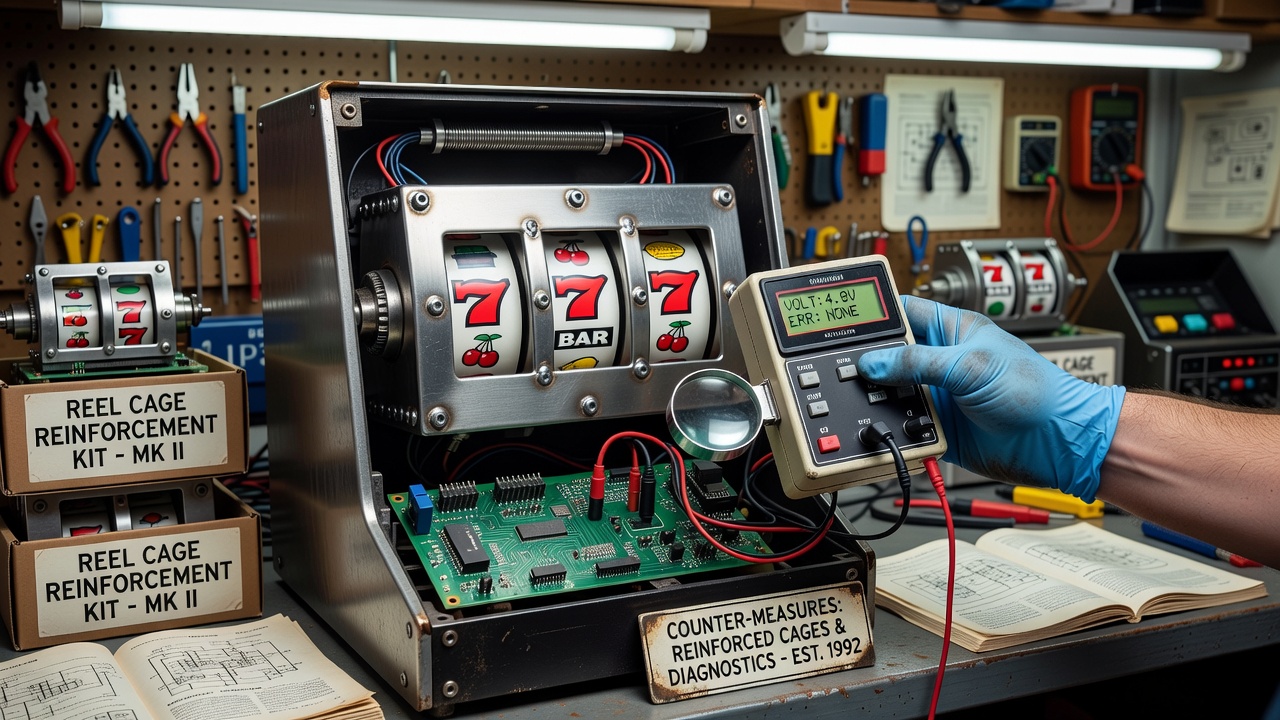
Reinforced reel cages consisted of additional metal barriers and locked enclosures around spinning reels that limited physical access from external tools while maintaining visibility for players, and installation records indicate these upgrades rolled out across major chains by the mid-1990s. Technicians welded or bolted thicker gauge steel frames to existing reel assemblies, which reduced the space available for thin wire probes to reach the reel stops or sensors. One maintenance crew working in northern England venues reported fewer successful intrusions after fitting cages that incorporated overlapping plates and tamper-evident seals, while similar modifications appeared in southern locations following shared industry bulletins from equipment suppliers. Figures from arcade operator associations reveal that reinforced cages cut reported tampering incidents by measurable margins within the first year of widespread adoption.
Early circuit diagnostics complemented the physical barriers by monitoring voltage fluctuations and reel rotation sensors through simple add-on boards that connected to existing machine wiring harnesses. These diagnostic units used basic comparator circuits to detect anomalies such as sudden resistance changes or unauthorized current draws that wire loops typically produced when bridging contacts inside the cabinet. Technicians calibrated the systems during routine service visits and reviewed output logs weekly to identify patterns before full malfunctions occurred. Research from gaming equipment manufacturers shows that integrating these early diagnostics allowed crews to isolate affected machines faster and prevent repeated exploits on the same units.
Technician Training and Field Implementation
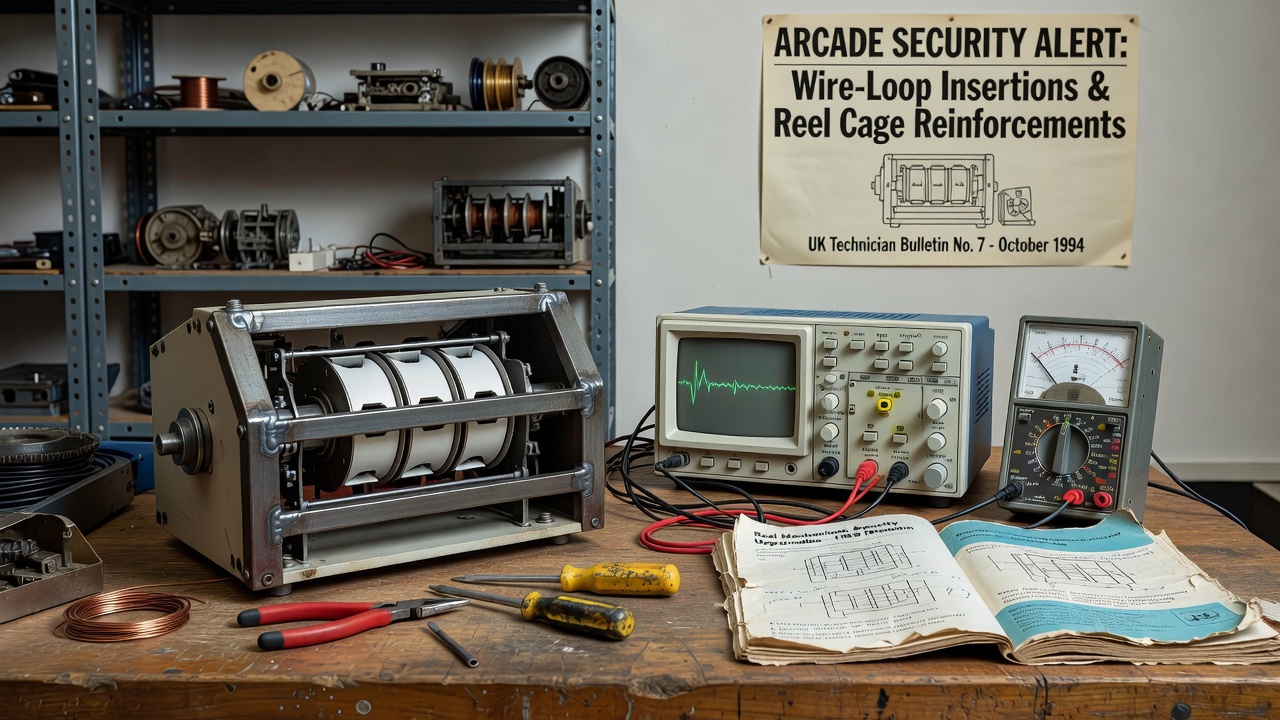
Training programs organized by equipment distributors taught technicians to recognize the subtle signs of wire-loop activity including faint scoring on reel edges and minor scuffs around coin entry points, and crews applied this knowledge when fitting new cages or adjusting diagnostic thresholds. Field reports compiled by regional service networks document how technicians in July 1995 began cross-referencing diagnostic alerts with physical inspections, which helped distinguish between genuine faults and deliberate interference. Those who've studied this period note that collaboration between technicians and venue managers accelerated the rollout because shared logs highlighted which machine models proved most vulnerable to the loops. What's interesting is that some venues experimented with clear polycarbonate cage panels that allowed visual checks without full disassembly, and these variations spread after initial trials demonstrated reduced downtime during peak hours.
Industry organizations such as the Gaming Technology Historical Society have preserved service manuals from the era that detail the progression from basic reinforcement to integrated diagnostics, while a 1997 study by the European Gaming Research Network examined how mechanical and electronic countermeasures evolved together in land-based operations. Technicians often combined both approaches on the same machine because physical cages alone could not address attempts that used longer or more flexible probes, yet diagnostics alone missed purely mechanical blocks that avoided electrical changes. Observers note that the dual strategy created layered protection that raised the effort required for successful tampering and encouraged operators to schedule more frequent preventive maintenance.
Long-Term Effects on Machine Design
By the late 1990s the combination of reinforced cages and circuit diagnostics influenced subsequent machine designs that incorporated sealed reel compartments as standard features, and manufacturers began embedding diagnostic functions directly into main control boards rather than relying on aftermarket additions. Maintenance data collected across multiple UK regions shows sustained reductions in payout discrepancies attributed to physical interference once these measures became routine. Technicians continued refining cage designs with spring-loaded access panels that required specific tools for opening, which further discouraged casual attempts while streamlining legitimate repairs.
Conclusion
The responses developed by 1990s UK arcade technicians established foundational practices that carried forward into later generations of gaming equipment, where physical barriers and electronic monitoring continued to evolve in tandem. Records maintained by equipment suppliers and service networks confirm that reinforced reel cages paired with early diagnostics addressed the specific threat of wire-loop insertions through practical, field-tested methods. These adaptations reflect the incremental engineering adjustments that occurred as operators encountered new tampering techniques and shared solutions across the arcade sector.