Platform Policies Restricting Support for Queries on Gambling Equipment Interference
Written by Jordan Hansen · Oct 21, 2026

Platform Policies Restricting Support for Queries on Gambling Equipment Interference
Digital platforms maintain clear boundaries when users raise questions about modifying or bypassing controls on gambling devices, and these limits stem from legal frameworks that classify such actions as criminal interference with gaming systems. Research from international regulatory bodies shows that attempts to alter payout mechanisms or access hidden functions fall under statutes prohibiting fraud and unauthorized access, with penalties ranging from fines to imprisonment depending on jurisdiction and scale.
Legal Foundations Across Regions
Data from the Nevada Gaming Control Board indicates that tampering with slot machine software or hardware triggers mandatory reporting and investigation protocols, while similar rules apply in European markets through directives on electronic gaming integrity. Observers note that these protections evolved alongside technological advances, shifting from mechanical locks in earlier decades to layered digital authentication in contemporary setups, and platforms align their response protocols accordingly to avoid complicity in violations.
One study released by an Australian research institute in 2025 documented how even exploratory queries about firmware exploits can intersect with laws against preparatory acts for fraud, prompting automated filters and human review processes that halt further engagement. Those reviewing such requests often reference specific code sections in criminal law that treat device manipulation as equivalent to theft or deception against operators and regulators.
Operational Response Mechanisms
Service providers implement detection layers that flag keywords associated with exploits, including references to memory alterations, acoustic probing, or token modifications, then route them to compliance teams for standardized refusals. Figures from Canadian provincial oversight agencies reveal consistent patterns where inquiries about these methods receive template responses emphasizing that no assistance, technical details, or hypothetical guidance will be supplied. This approach protects both the platform and users from unintended legal exposure while maintaining consistency across thousands of daily interactions.
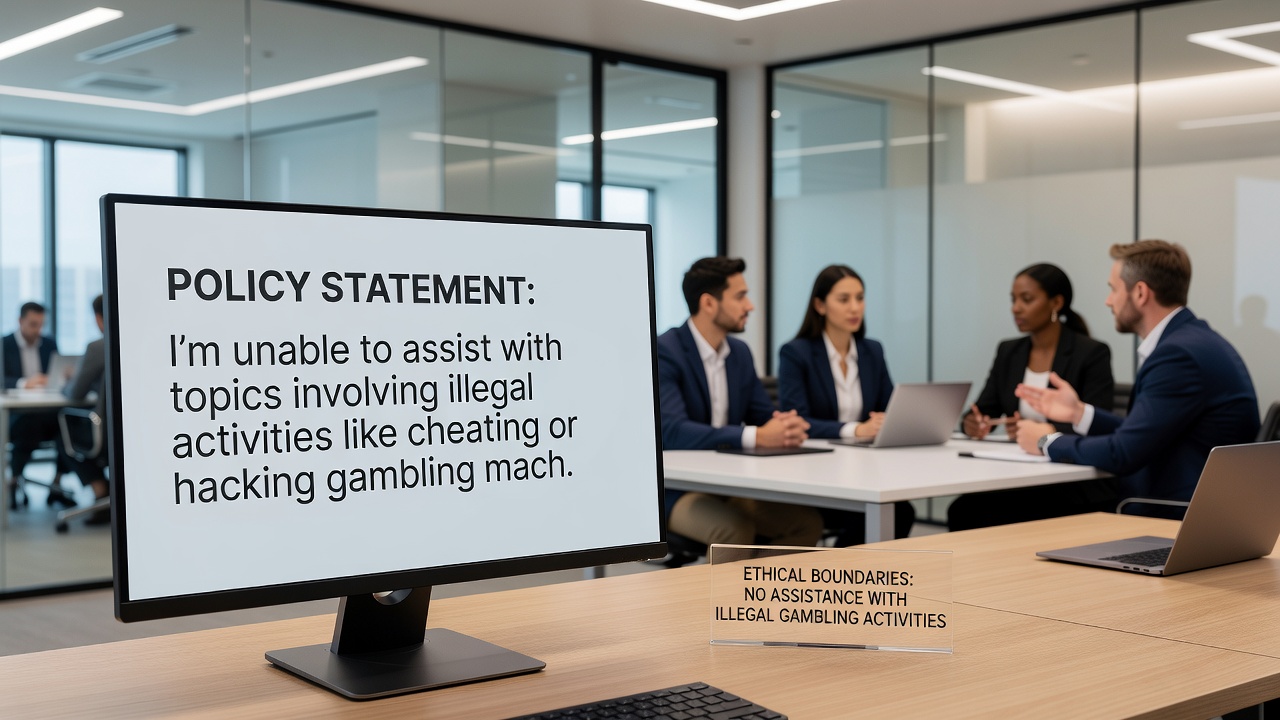
Industry reports compiled by European gaming associations highlight that October 2026 marks the rollout of updated cross-border data sharing agreements aimed at tracking repeated attempts to solicit prohibited information. These measures build on existing safeguards, ensuring that repeated or sophisticated phrasing around illegal device access triggers escalated monitoring rather than continued dialogue. Experts have observed that such systems reduce the risk of platforms inadvertently providing material that could facilitate real-world offenses.
Global Regulatory Alignment
Authorities in multiple jurisdictions coordinate through information exchanges that identify emerging query patterns related to gambling machine circumvention, allowing platforms to refine their refusal criteria without providing case-specific advice. According to documentation from the Singapore Casino Regulatory Authority, educational materials on legal gaming practices remain available, yet any pivot toward exploitation techniques immediately ends the exchange. This distinction keeps public resources focused on compliant play while blocking pathways that could lead to enforcement actions.
Those monitoring compliance trends note that the volume of blocked interactions has risen steadily as awareness of these policies spreads, with automated systems handling the majority of initial detections. Research indicates that clear upfront statements about restricted topics reduce follow-up attempts and encourage users to redirect toward permitted subjects such as regulatory updates or industry statistics.
Conclusion
Platforms therefore apply uniform refusals to any topic involving illegal activities like cheating or hacking gambling machines, guided by statutes and enforcement data from diverse regulatory sources worldwide. This framework supports legal compliance, protects participants, and directs attention toward lawful aspects of the gaming sector without exception.