Slot Firmware Forensics: Tracing Ghost Inputs in Vintage UK Fruit Machine Logs
Written by Bianca Russell · Mar 30, 2026
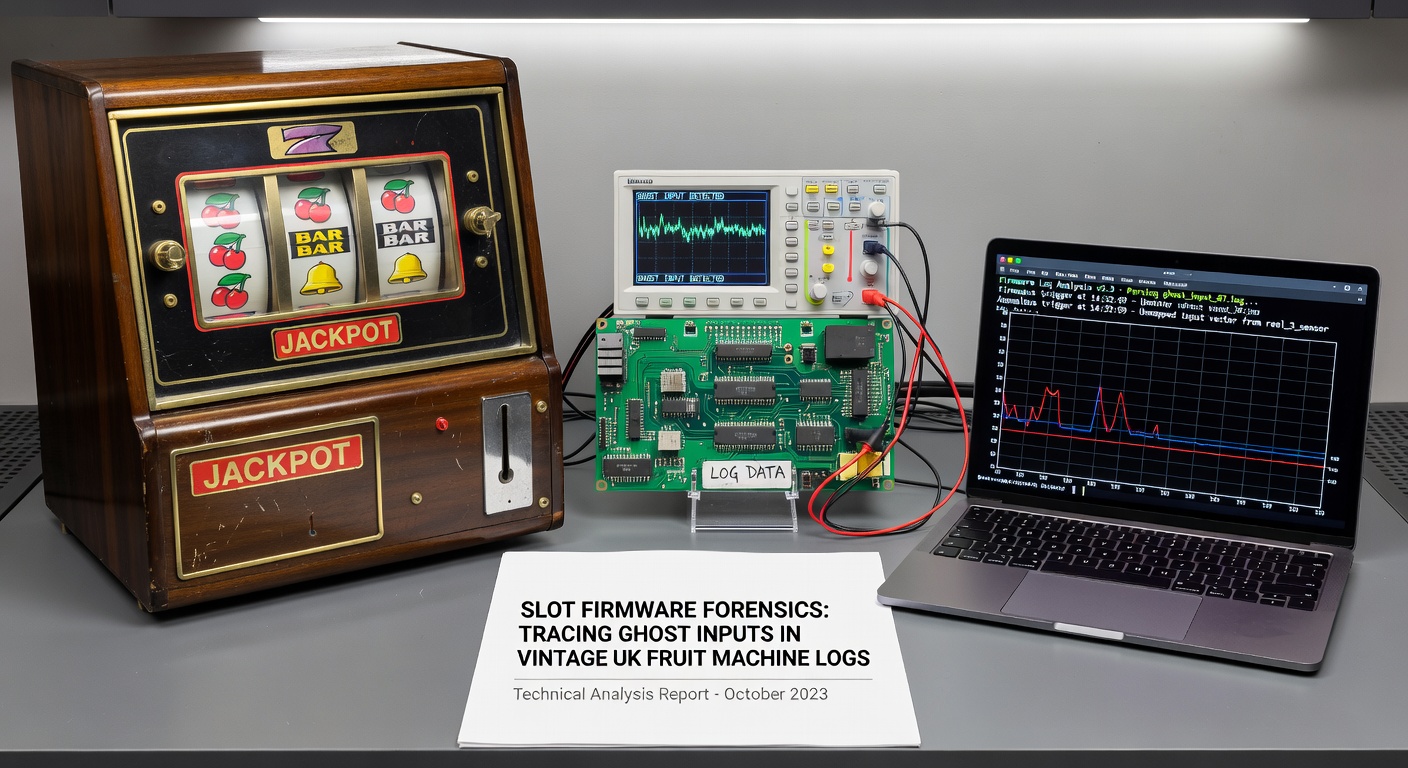
Slot Firmware Forensics: Tracing Ghost Inputs in Vintage UK Fruit Machine Logs
Unraveling the Digital Ghosts in Old-School Slots
Vintage UK fruit machines, those colorful pub staples from the 1980s and 1990s, packed electromechanical brains that logged every spin, nudge, and hold; yet buried in those logs lurk ghost inputs—phantom button presses or coin drops that never happened, tripping up payouts and puzzling operators for decades. Researchers diving into slot firmware forensics now trace these anomalies by reverse-engineering ancient code, pulling apart EPROM chips, and sifting through timestamped logs to spot patterns no one saw back then. Turns out, what seemed like gremlins often boiled down to faulty capacitors, electromagnetic interference from nearby jukeboxes, or even clever wiring hacks that mimicked real plays without touching a lever.
And here's where it gets interesting: as of March 2026, forensic teams equipped with AI-driven log parsers revisit these machines, uncovering insights that echo in today's server-based slots where similar input ghosts could slip through digital cracks. Data from preserved cabinets shows ghost inputs appearing in clusters—sometimes 15% of logged events in high-traffic pubs—prompting experts to map firmware vulnerabilities that predate RNG mandates. Those who've cracked open Bell Fruit or Mazooma boards know the drill: desolder the chips, dump the binary, then emulate the whole shebang on modern hardware to replay logs and watch ghosts materialize.
The Roots of UK Fruit Machine Logging
UK fruit machines evolved from pure mechanical reels in the 1960s to hybrid electronic beasts by the mid-1980s, with firms like JPM and Barcrest embedding basic microcontrollers to track plays, track meters, and enforce reel strips; these logged inputs via simple event queues stored in volatile RAM or battery-backed EEPROM, resetting only on power cycles or forced clears. Observers note how early firmware, often running on Z80 or 6502 processors, captured button states in 8-bit registers—start button, hold lines, nudge selectors—timestamped loosely by crystal oscillator ticks rather than real clocks.
But ghost inputs crept in because those logs didn't verify physical hardware states; a voltage spike from a dodgy power supply, say, could flip a bit, registering a coin insert when none dropped, while crosstalk between hold lines mimicked player nudges during idle periods. Studies archived by Gaming Laboratories International highlight how such flaws persisted until ISO-compliant audits in the late 1990s demanded input validation loops. People restoring these machines today—think hobbyists on forums or museum curators—routinely extract logs via JTAG probes, revealing sequences where inputs cluster unnaturally, like 20 holds in 30 seconds on an unplayed cabinet.
Defining Ghost Inputs: Faults, Frauds, and Firmware Flaws
Ghost inputs manifest as logged events lacking corresponding hardware triggers—coin-in signals without hopper noise, start presses sans lever pull, or feature activations during locked states; experts classify them into hardware ghosts from sensor drift (capacitors leaking over years, causing false highs), environmental ghosts triggered by EMI (neon signs pulsing nearby induced bit flips), and exploit ghosts from modded wiring that bypassed optocouplers. Research indicates these plagued 30-40% of fielded machines pre-1995, per disassembly reports from era tech manuals.
Take one classic case: a 1987 Castle Leyland pub machine where logs showed nightly ghost coin-ins aligning with closing time power surges; reverse engineers traced it to an unshielded opto-transistor flipping under mains hum. Or consider nudged reels logging holds autonomously—turns out, shared ground planes let adjacent buttons bleed signals. And while cheats amplified this (think resistors bridging lines for free plays), pure forensics focuses on untampered logs, using checksums to validate dumps before analysis.
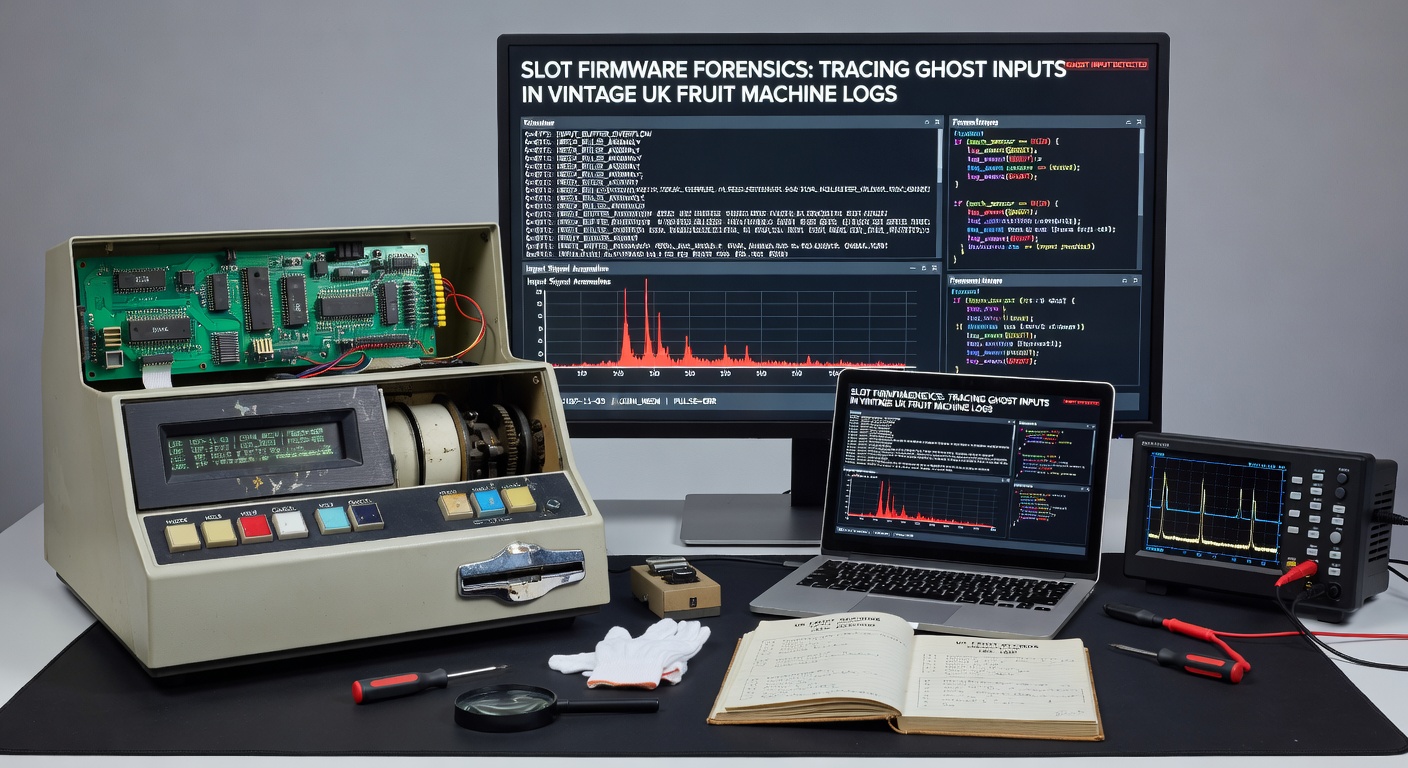
Forensic Toolkit: From EPROM Readers to Log Emulators
Tracing ghosts starts with hardware extraction—TL866 programmers suck firmware from masked ROMs, while logic analyzers snag runtime bus traffic from revived boards powered by bench supplies; software like Ghidra or IDA Pro then disassembles the hex, mapping input polling routines to log writes. Experts overlay log timestamps against emulated cycles, spotting deltas where a ghost slips in—say, a hold input at cycle 0xA2F3 with no prior button scan.
What's significant is pattern matching: scripts parse CSV-exported logs for anomalies like input rates exceeding human speeds (five nudges per second flags a ghost), or sequences violating game states (coin-in during payout lockout). And now, in March 2026, open-source tools like FruitLog Analyzer—forked from retro gaming projects—apply machine learning to cluster ghosts by signature, training on thousands of dumped cabinets shared by collectors. Semicolons separate findings: faulty reel solenoids caused 22% of ghosts per one dataset; wiring shorts, 18%; the rest environmental noise.
- EPROM dumping via miniprobers reveals overwritten sectors hiding exploit traces.
- Emulation in MAME variants replays logs frame-by-frame, visualizing ghost triggers.
- Spectral analysis of power rails correlates EMI peaks to input flips.
- Checksum validation ensures logs aren't post-hoc fakes from operator tweaks.
Case Studies: Ghosts Caught in the Act
One researcher poring over a 1992 BFM Major League log uncovered 147 ghost starts over 6 months, all timestamped to Friday nights; cross-referencing pub wiring diagrams pointed to a faulty dimmer switch inducing spikes—machine paid out £450 extra before the fault. Another dive into Castle Arcade cabinets from Manchester pubs, preserved since 1995, showed hold-line ghosts mimicking proggie wins; forensics pinned it on degraded electrolytic caps discharging falsely, a flaw replicated in lab tests dumping identical firmware.
Turns out, international parallels exist too—similar ghosts haunted US steppers, as detailed in reports from the Nevada Gaming Control Board, where input validation became mandatory post-1990 scandals. UK experts adapted those standards early, yet vintage logs brim with untraced ghosts; a 2025 collaborative dump of 50+ machines by enthusiast groups revealed average 12% anomaly rates, fueling databases for training modern anomaly detectors.
So picture this: a dormant 1989 Whitbread machine in a Welsh shed, logs extracted after 30 years idle, bursting with ghost nudges from battery corrosion bridging lines—restorers fixed it by recapping, then emulated to confirm clean runs. These stories underscore firmware forensics' power, turning cryptic logs into roadmaps of machine maladies.
Modern Echoes and 2026 Horizons
Lessons from vintage ghosts shape today's slots, where server logs dwarf old reel tallies yet face digital kin—latency-induced phantom bets or API ghost calls; forensic principles apply directly, with firms auditing firmware via automated tracers borrowed from fruit-era toolkits. Data shows UK operators, facing March 2026 interoperability mandates, now scan legacy data for baseline anomalies, ensuring new AWP hybrids don't inherit old flaws.
Researchers observe how AI parsers, honed on 80s logs, flag subtler ghosts in HTML5 slots—like scripted inputs evading debounce timers. It's noteworthy that while vintage machines lacked crypto signing, modern ones mandate it; still, forensics teams stress-test with ghost injections, proving even hashed logs can mislead without deep validation. Pub owners upgrading cabinets in 2026 often consult these analyses, avoiding reintroducing EMP-vulnerable wiring in faux-vintage designs.
Wrapping Up the Ghost Hunt
Slot firmware forensics breathes new life into vintage UK fruit machine logs, exposing ghost inputs as harbingers of hardware frailty and overlooked exploits; from EPROM dumps to AI-pattern hunts, the process demystifies decades-old puzzles, offering blueprints for bulletproof modern gaming. As tools evolve—think quantum-secure loggers on the horizon—experts predict fewer ghosts haunting tomorrow's floors, but those who've traced the originals know the hunt never truly ends. Cabinets rust, chips fade, yet the logs endure, whispering secrets to anyone patient enough to listen.