The Transition to Electronic Coin Verification in Mid-20th Century British Gaming Devices
Written by Bianca Russell · Jul 31, 2026
The Transition to Electronic Coin Verification in Mid-20th Century British Gaming Devices
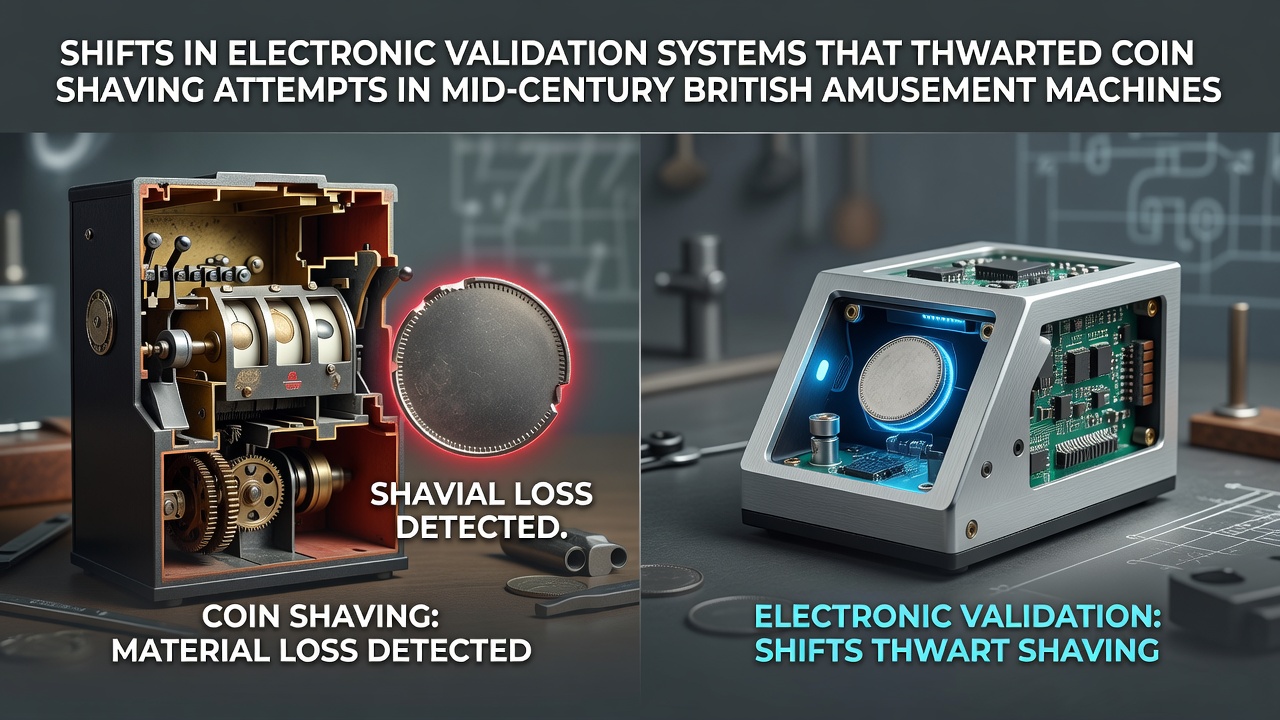
Coin shaving presented persistent challenges for operators of British amusement machines during the 1950s and 1960s, as individuals filed or ground down coins to reduce their weight and size while attempting to trigger payouts or credits. Mechanical validators at the time relied primarily on physical dimensions and basic weight checks, which allowed altered tokens to pass through chutes undetected in many cases, and industry records indicate that such practices affected revenue collection across seaside arcades and pub gaming setups throughout the period.
Early Mechanical Limitations and Rising Incidents
Amusement equipment from manufacturers like Barcrest and JPM incorporated coin mechanisms that used springs, levers, and simple scales to authenticate currency, yet these systems proved vulnerable once players began targeting specific denominations with precision tools. Data compiled by arcade trade associations shows that reported losses from manipulated coins climbed steadily between 1955 and 1965, prompting initial upgrades such as tighter tolerance slots and additional rejector pins, while operators in coastal regions noted higher rates of attempted fraud during peak summer seasons.
Researchers who examined surviving machine logs from that era found patterns of repeated small-value insertions followed by occasional successful credits, demonstrating how consistent shaving allowed certain coins to bypass early defenses. Those who've studied the hardware observe that the physical nature of these validators left little room for dynamic adjustments once a new shaving technique emerged, leading to frequent service calls and part replacements across venues.
Introduction of Electronic Sensing Technologies
By the late 1960s manufacturers began integrating basic electronic components into coin validation pathways, shifting from purely mechanical sorting to systems that measured electrical conductivity and magnetic properties alongside weight. These hybrid designs used simple circuits and sensors to detect discrepancies in metal composition that filing could not fully disguise, and figures from equipment suppliers reveal that adoption accelerated after 1968 as component costs declined. Observers note that the move toward electronics allowed validators to reject coins that matched size and weight but failed conductivity tests, closing a significant loophole that mechanical methods alone could not address.
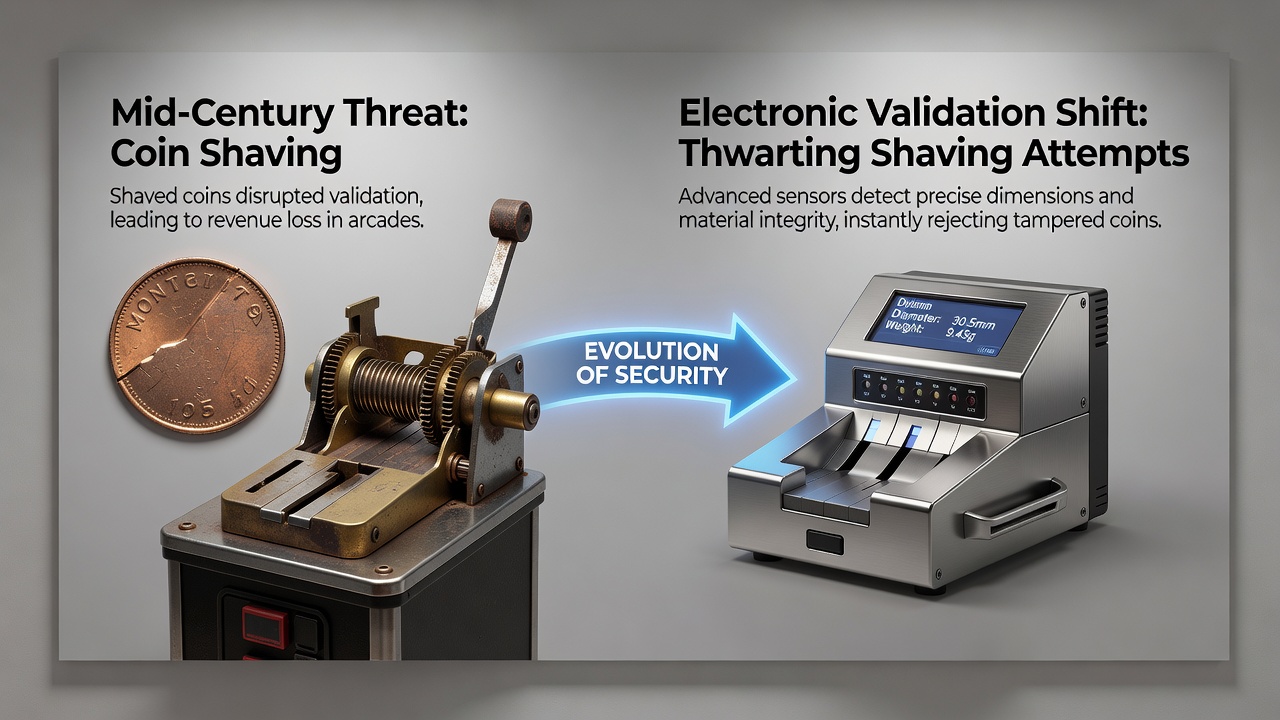
One documented case involved a series of machines in northern England where electronic upgrades reduced successful shaved-coin entries by measurable margins within the first year of installation, according to maintenance logs preserved by venue owners. Experts have observed that the addition of electromagnetic coils provided a secondary verification layer that responded in real time, rejecting altered pieces before they reached payout mechanisms. What's interesting is how these early circuits laid groundwork for more sophisticated later models without requiring complete machine overhauls in many instances.
Broader Industry Adoption and Technical Refinements
Trade publications from the period document how multiple British firms standardized electronic validator modules by the early 1970s, incorporating micro-switches and basic logic gates that cross-checked multiple physical attributes simultaneously. Studies conducted by university engineering departments in Europe during the 1970s confirmed that combined sensor arrays outperformed single-method mechanical systems against common shaving variations, and similar findings appeared in reports issued by gaming equipment research groups in Australia and Canada. Those who've examined archived schematics note that refinements included adjustable sensitivity settings, allowing operators to calibrate machines for local coin conditions while maintaining security thresholds.
Implementation spread unevenly at first, with larger chains investing sooner than independent operators, yet the cumulative effect appears in declining complaint volumes recorded by regional amusement associations after 1972. And while initial electronic units required occasional calibration, their reliability improved as solid-state components replaced earlier vacuum-tube designs in subsequent iterations.
Conclusion
The progression from mechanical to electronic coin validation in mid-century British amusement machines addressed specific vulnerabilities exposed by coin shaving techniques through layered sensing methods that combined weight, dimension, conductivity, and magnetic detection. Historical equipment records and contemporary technical analyses demonstrate that these shifts reduced successful manipulation rates as adoption widened, establishing verification principles that influenced later machine designs across multiple regions.