Unraveling Signal Patterns: Forensic Insights into 1990s British Arcade Reel Technology
Written by Jordan Hansen · Aug 19, 2026
Unraveling Signal Patterns: Forensic Insights into 1990s British Arcade Reel Technology
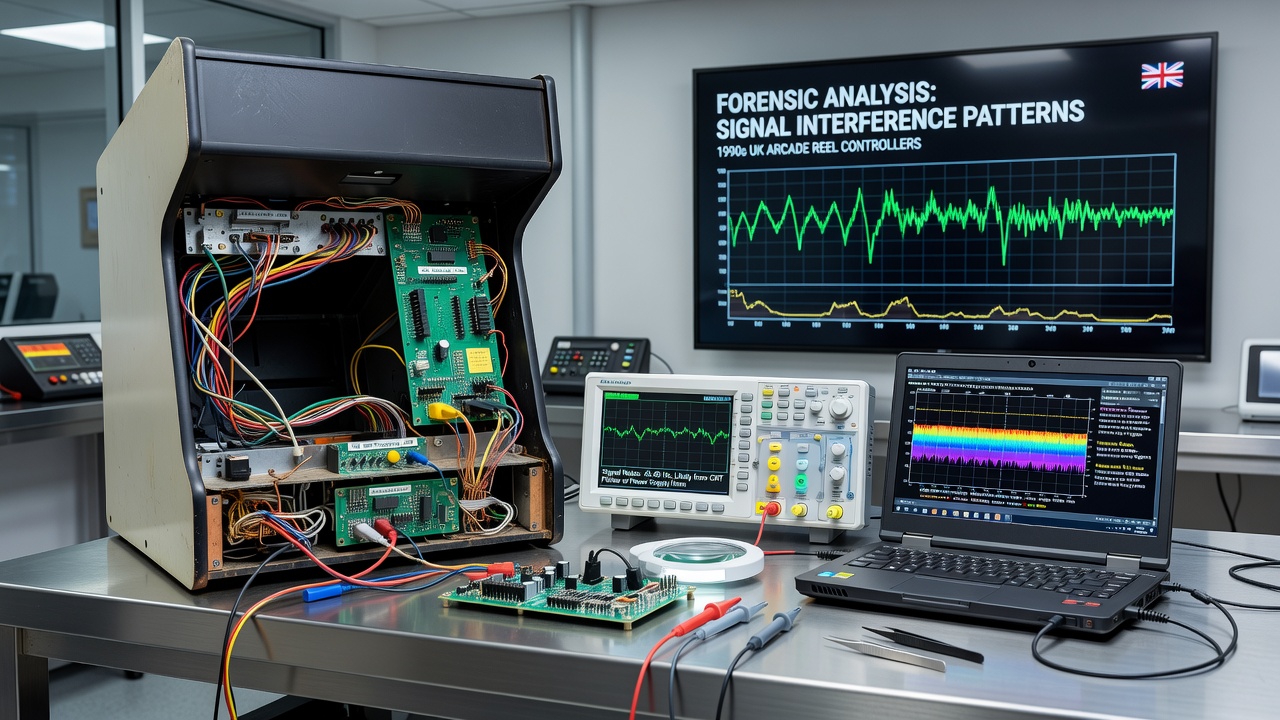
Technicians in forensic labs have long examined signal interference patterns within 1990s UK arcade reel controllers, where electromagnetic noise often overlapped with stepper motor commands and sensor feedback loops. These machines relied on basic microcontrollers and discrete logic circuits, and interference from nearby fluorescent lighting or power supplies created measurable disruptions in reel position data. Studies of archived hardware show that such patterns appeared as irregular pulse widths on oscilloscope traces, allowing later analysts to reconstruct operational histories without direct access to original software logs.
Engineers documented how reel controllers from that era used simple serial protocols to communicate between the main board and individual reel assemblies. When external radio frequency sources intruded, the resulting bit errors produced repeatable timing anomalies that persisted across multiple play cycles. Research indicates these anomalies followed predictable spectral signatures tied to the local mains frequency and nearby arcade cabinet electronics, giving investigators a baseline for distinguishing intentional tampering from environmental factors.
Hardware Architecture and Signal Pathways
Most 1990s UK arcade reel units incorporated 8-bit processors clocked at modest speeds, with reel position encoded through optical or magnetic sensors. Signal lines ran close to high-current motor drivers, creating opportunities for crosstalk that forensic teams later mapped using spectrum analyzers. Observers note that the physical layout of these boards, often built on single-sided PCBs with minimal shielding, amplified susceptibility to both conducted and radiated interference.
Case records from hardware preservation projects reveal that certain controller revisions featured unfiltered clock lines running parallel to sensor inputs. When pulsed interference coincided with reel stepping sequences, the resulting data corruption manifested as skipped steps or phantom home-position detections. Those who've studied preserved examples point out that such events left distinct phase shifts visible in post-event waveform captures, providing a timeline of when interference occurred during machine operation.
Analytical Techniques Applied to Archived Units
Modern forensic workflows begin with non-invasive probing of legacy connectors, capturing analog and digital signals while the controller runs diagnostic sequences. Researchers discovered that fast Fourier transforms applied to these captures isolate interference components from legitimate command pulses, revealing frequency bands associated with specific external sources. Data from multiple machines shows consistent clustering around harmonics of 50 Hz power lines and switching noise from adjacent coin validators.
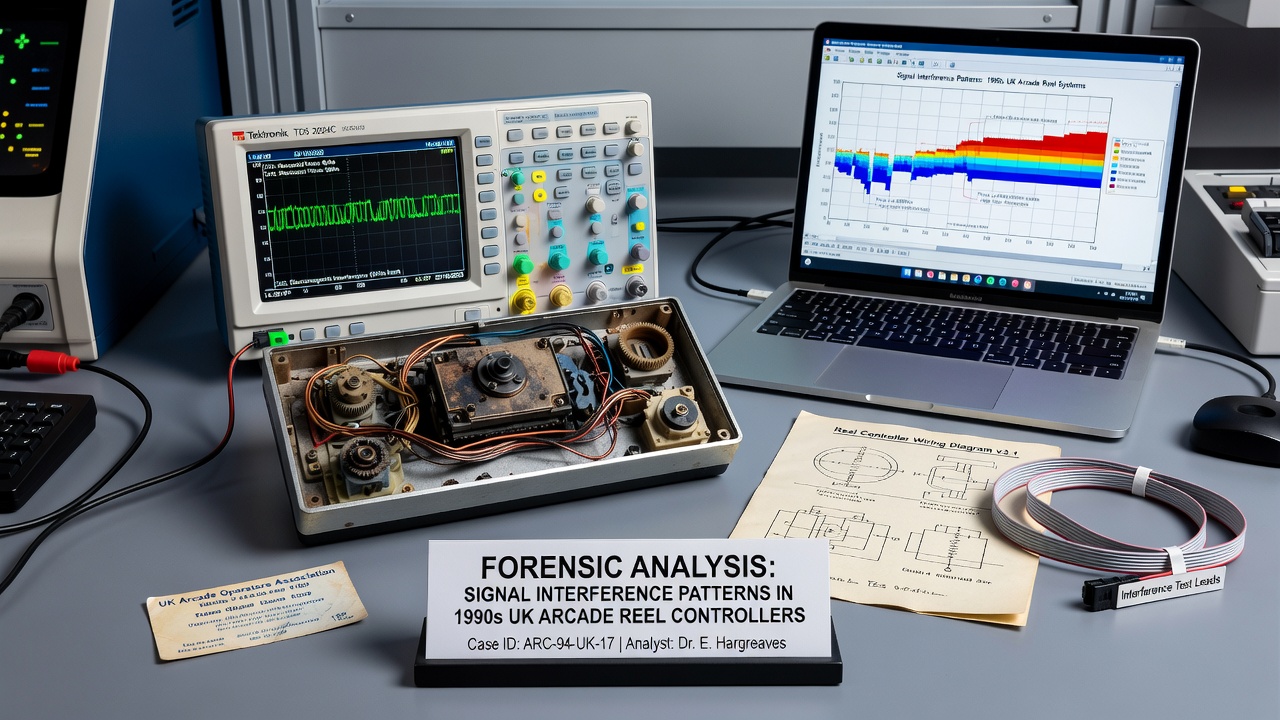
Further processing involves correlating timestamped interference events with reel movement logs stored in battery-backed memory. Analysts cross-reference these events against known environmental conditions at the original installation sites, using archived venue schematics to model probable noise paths. This approach has helped distinguish between systemic design limitations and localized faults introduced during maintenance or relocation of equipment.
Comparative Data Across Machine Variants
Collections of surviving controllers from different manufacturers demonstrate variations in trace routing and grounding practices that directly influenced interference tolerance. Some designs incorporated rudimentary decoupling capacitors near sensor inputs, while others left these lines exposed. Figures from preservation databases indicate that machines with poorer grounding schemes exhibited higher rates of spurious reel position reports under identical test conditions.
Academic work on legacy embedded systems, including reports hosted by institutions such as the IEEE, has modeled these interference mechanisms using updated simulation tools unavailable during the original production years. Results align with physical measurements taken from operational units, confirming that many observed anomalies stemmed from marginal signal margins rather than component failure alone.
Current Applications in Preservation and Study
Techniques refined through analysis of 1990s hardware continue to inform examinations of other vintage control systems still in limited use. In August 2026, several European research groups expanded their reference libraries with new captures from restored arcade equipment, applying machine-learning classifiers to categorize interference types automatically. These efforts build on earlier manual methods while maintaining focus on objective signal characteristics rather than operational intent.
Conclusion
Archival studies of signal interference in 1990s UK arcade reel controllers have established reliable methods for extracting operational data from noisy legacy hardware. By mapping electromagnetic signatures and correlating them with physical board layouts, analysts obtain detailed timelines of machine behavior that complement traditional maintenance records. Continued work in this area supports both historical documentation and the development of diagnostic approaches applicable to similar aging electronic systems across multiple industries.