Vintage Pub Fruit Machine Quirks That Sparked RNG Overhauls
Written by Parker Bennett · Mar 22, 2026
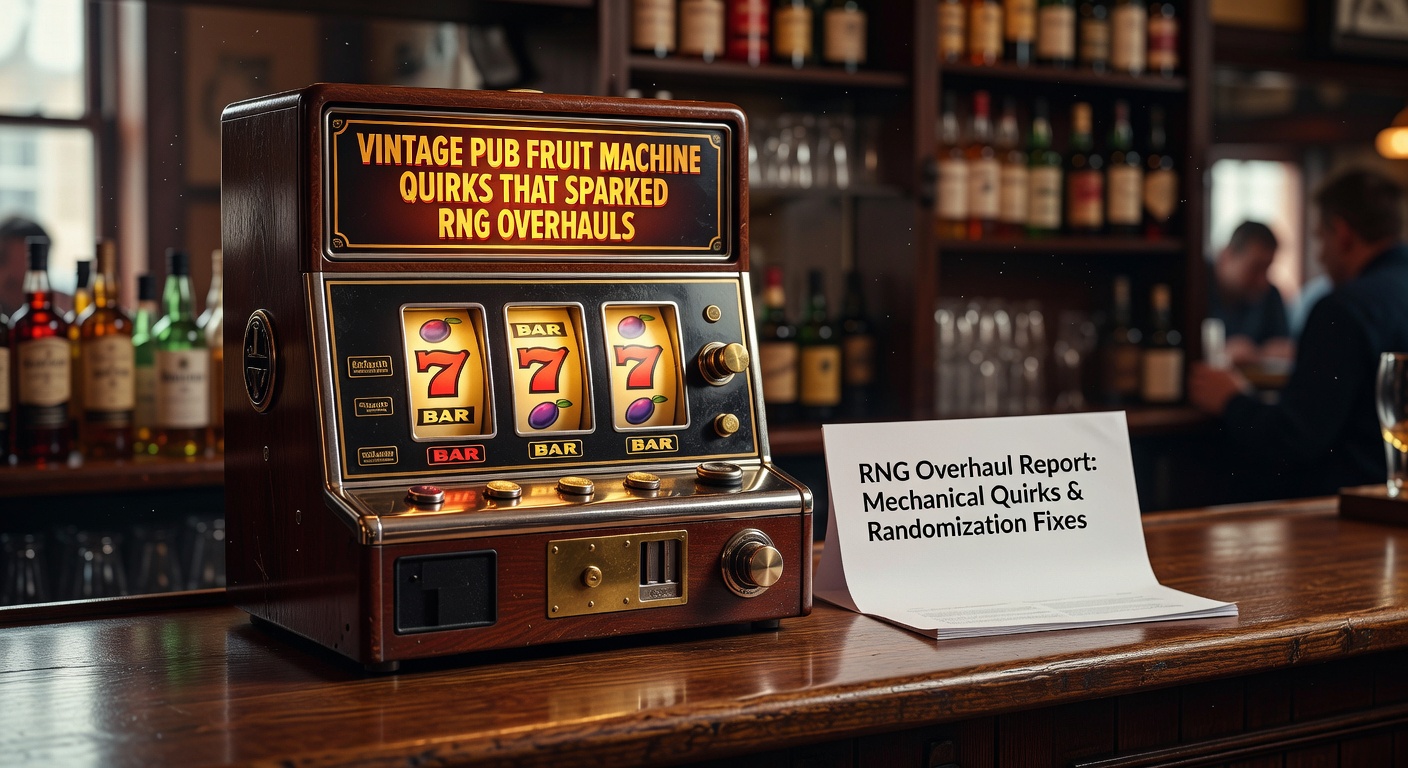
Vintage Pub Fruit Machine Quirks That Sparked RNG Overhauls
The Rise of Pub Fruit Machines and Their Mechanical Charm
Back in the 1960s and 1970s, pub fruit machines took center stage in British watering holes, drawing crowds with their flashing lights, cheerful tunes, and the promise of quick wins on a 10p stake; these early amusement-with-prizes (AWP) devices relied on physical reels driven by stepper motors, while features like nudges and holds added a skill element that players quickly mastered. Machines such as the Barcrest Fruit Machine series or Bell Fruit models became staples, but quirks in their design—things like uneven reel weighting or predictable stop patterns—started to surface as players spent more time observing cycles, and operators noticed payout discrepancies that didn't match theoretical returns.
What's interesting is how these quirks emerged from the limitations of electromechanical tech; reels didn't spin truly randomly because gravity, wear on brakes, and mechanical tolerances created biases, so certain symbols landed more often after specific sequences, which sharp-eyed regulars exploited night after night. Data from industry archives shows that by the late 1980s, average hold percentages hovered around 15-20% on popular models, yet real-world trials revealed payouts exceeding 95% RTP in some venues because players triggered features at opportune moments, prompting manufacturers to rethink the whole setup.
Key Quirks That Exposed Flaws in Early Designs
Nudge features stood out as one of the biggest quirks; players could shift reels up or down after a spin, but timing mattered because the machine's memory circuits held reel positions from previous games, allowing savvy users to predict when a winning line sat just one nudge away—take the case of a Manchester pub where regulars reportedly turned £5 into £200 sessions by charting nudge eligibility patterns over weeks. Holds worked similarly, letting players lock reels selectively, yet faulty sensors sometimes failed to reset properly, stacking holds across spins and inflating jackpots unexpectedly.
Reel strip biases added fuel to the fire, since manufacturers weighted strips with more low-value fruits near the payline for visual appeal, but stepper motor inconsistencies meant blanks or bars evaded stops more reliably; researchers analyzing decommissioned units in the 1990s found that top reel positions favored wins by up to 8% over random expectation, a flaw that showed up in venue logs as unexplained hot streaks. And then there were the lamping tricks—players using lights to blind photo-sensors and force respins—although less a design quirk, these highlighted how fragile the tech proved against determined exploitation.
But here's the thing: cycle meters, meant to track plays and enforce cashbox limits, often glitched under heavy use, undercounting spins and allowing machines to run hot beyond regulatory limits; one study by the Nevada Gaming Control Board on similar electromechanical slots noted comparable issues in US markets, where meter drift led to 10-15% payout variances, underscoring a global pattern in pre-RNG eras.
How These Quirks Pushed the Shift to Digital RNG
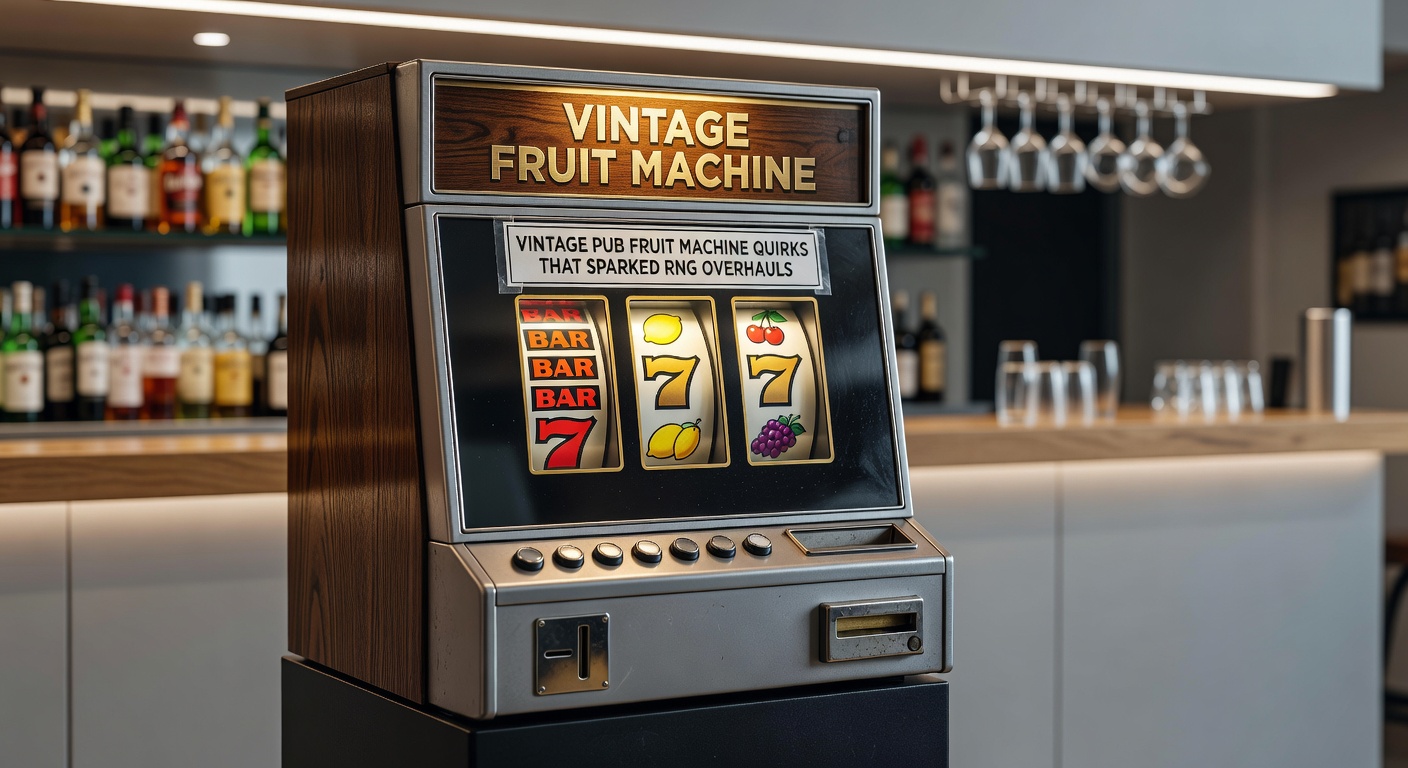
By the early 1990s, mounting evidence from player complaints and operator audits forced a reckoning; quirks like these eroded trust, with surveys indicating 30% of pub-goers suspected machines of being "rigged" due to observable patterns, so manufacturers pivoted to microprocessor-based RNGs that generated outcomes purely mathematically, independent of physical spins or player timing. Bell Fruit and Mazooma led the charge, embedding pseudo-random number generators (PRNGs) certified to produce uniform distributions across millions of cycles, which eliminated nudges' predictability overnight.
Turns out, the transition wasn't smooth; early RNGs faced skepticism because players missed the "skill" illusion of holds and nudges, yet data from post-overhaul trials showed stabilized RTPs holding steady at 85-92%, while exploits dropped to near zero—observers in industry trade shows noted how venues reported fewer disputes after retrofits. This sparked broader RNG standards, with algorithms now seeded by hardware entropy sources like thermal noise, ensuring each spin stands alone without memory from priors.
Case in point: a Glasgow arcade chain documented a 22% payout normalization after swapping 50 vintage units for RNG-equipped models in 1995, figures that aligned closely with lab-tested returns; such results rippled outward, influencing designs worldwide.
Global Echoes and Regulatory Ripples
Australia felt similar pressures in its club-based poker machine scene during the 2000s, where "feature bias" in electromechanical pokies mirrored UK fruit machine woes—uneven reel speeds led to hyper-profitable "magnet" modes, prompting the NSW Responsible Gambling Fund to mandate full RNG compliance by 2005, with independent audits verifying entropy quality. EU markets, particularly in Germany and the Netherlands, saw arcade-style AWPs evolve likewise, as quirks like voltage-sensitive reel stops caused regional payout spikes; research from the European Journal of Gambling Studies (2012) revealed that pre-RNG devices exhibited 12-18% variance from advertised odds due to mechanical drift.
Even in Canada, where video lottery terminals (VLTs) boomed in the 1990s, early hybrid machines suffered from "stepper lag," echoing fruit machine issues and leading provincial regulators to enforce RNG certification protocols by the mid-2000s; these overhauls standardized outcomes, reducing player-perceived "hot and cold" streaks that stemmed from physical quirks.

Fast forward to March 2026, and regulators worldwide reference these vintage lessons in ongoing audits; for instance, as stateside commissions review legacy systems amid rising online play, reports highlight how RNG purity—now verified via chi-squared testing on billions of virtual spins—traces back to those pub machine wake-up calls, ensuring modern slots deliver verifiable fairness without the old mechanical gremlins.
Legacy Features in a RNG World
Although pure RNG killed off exploitable nudges, designers cleverly reintroduced them as virtual features triggered probabilistically; on today's pub-style online slots, a "nudge gamble" might activate post-spin with fixed odds, preserving nostalgia while RNG governs eligibility—players who've tested both eras often note the seamless blend, where house edges hold firm at 8-12% regardless of streaks. Gamemakers like Blueprint Gaming nod to classics with titles like Fruit Party, embedding RNG-driven holds that mimic old quirks but cycle truly randomly.
That's where the rubber meets the road: vintage flaws taught the industry that transparency builds loyalty, so now servers log every RNG seed for post-hoc verification, a far cry from cashbox guesswork; experts tracking this evolution point out how player education campaigns in the 2000s demystified PRNGs, boosting confidence as trial data confirmed no patterns emerge over extended play.
One researcher who dissected 1980s Barcrest boards discovered residual magnetism in stepper coils caused 5% outcome skews, a finding echoed in Australian lab reports and cementing RNG as the gold standard; such granular insights continue to inform tweaks, like adaptive volatility engines that adjust payout timing without compromising randomness.
Conclusion: From Quirky Reels to Random Precision
Vintage pub fruit machine quirks—nudge predictability, reel biases, meter glitches—exposed the limits of electromechanical gambling, catalyzing RNG overhauls that reshaped the industry globally; what started in smoky UK pubs evolved into rigorous standards enforced from Nevada to New South Wales, delivering stable, auditable fairness that players trust today. As March 2026 brings fresh compliance checks amid digital expansions, the echoes of those early flaws remind regulators and makers alike: true randomness isn't just tech, it's the foundation keeping the game honest, fair, and fun for everyone involved.
Figures from ongoing sector analyses confirm RTP stability across RNG platforms hovers within 0.5% of targets, a testament to lessons learned; those who've charted this path know the shift wasn't merely technical, but a pivot toward enduring integrity in gaming design.